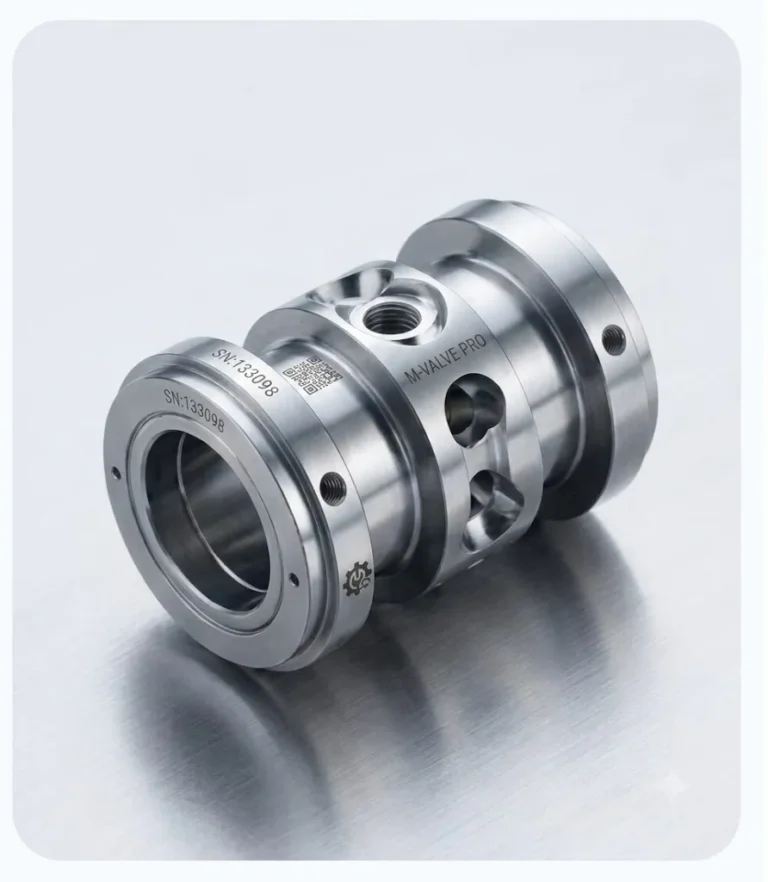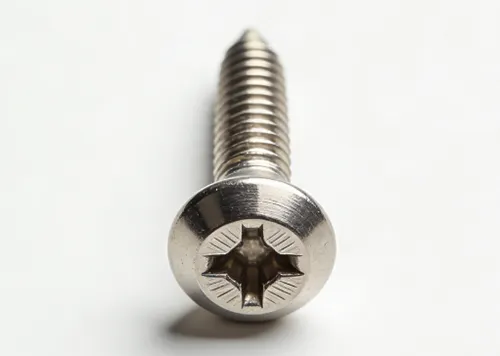
Semiconductor precision components are core components of semiconductor manufacturing equipment such as lithography and etching machines,and their processing accuracy directly affects chip yield and performance.As the chip manufacturing process becomes more miniaturized,CNC machining needs to overcome several technical bottlenecks.The main challenges are reflected in the following six aspects:
Six Difficulties in Semiconductor Parts Machining
1.Micro-and Nano-Level Accuracy Control
Currently,the accuracy of semiconductor precision components has reached the nanometer range,making the control of dimensions,geometric tolerances,and surface quality extremely difficult.This is a significant challenge in machining.
Regarding dimensions and geometric tolerances,the diameter tolerance of the positioning holes in the objective lens support of high-end lithography equipment needs to be controlled within±0.001mm(approximately 1/70th the diameter of a human hair),and the positional error of the 24 positioning pin holes must be kept below 0.003mm.If the geometric tolerance of the reaction chamber of the etching equipment exceeds 0.01mm,it is likely to lead to batch defects in 12-inch wafers.Regarding surface quality,the surface roughness of components is generally required to be less than Ra0.1μm(less than Ra0.03μm for RF electrode plates),requiring multiple micro-machining processes and strict control of burrs and micro-scratches.
2.Thermal Deformation
Thermal deformation accounts for 30%to 50%of nano-scale machining errors.Even a temperature difference of just 1°C can cause accuracy defects,potentially rendering previous precision machining efforts useless.
The heat generated during machining mainly comes from cutting friction,spindle operation,and coolant temperature changes.The industry generally adopts methods such as”separating rough machining,finishing machining,and processing steps,and ensuring cooling time,””temperature control with low-temperature coolant at 5±1°C,”and”combining a granite bed and air spindle”to strictly control thermal deformation from both process design and equipment selection perspectives.
3.Thin-Walled and Irregularly Shaped Parts
Semiconductor components often possess characteristics such as thin walls,irregular shapes,and microstructures.Examples include microchannels on 0.5mm thick ceramic substrates and 2mm thick vacuum chambers.These structures present a double challenge in terms of rigidity during processing and securing clamping positions.
The clamping process requires specialized tools such as vacuum chucks and flexible fixtures to prevent deformation of thin-walled parts.For machining complex,irregularly shaped parts,7-axis CNC machine tools are used to ensure indexing accuracy.For machining microstructures and freeform surfaces,in addition to 5-axis CNC technology that enables”one-time clamping,multi-face machining,”a combination of multiple precision milling and forming processes is required to keep dimensional errors within±0.003mm.
4.High Hardness and Brittle Materials are Difficult to Machine
Materials commonly used in semiconductor components include aluminum alloys,stainless steel,and engineering ceramics.These materials have significantly different physical properties,placing extremely high demands on the machining process.Machining high-hardness ceramics,in particular,is extremely difficult.
Engineering ceramics such as Al₂O₃and silicon nitride have a hardness exceeding HV1500 and can only be machined with diamond grinding wheels.However,chipping often occurs during machining,requiring strict control of the grinding depth to within 0.002mm.316L stainless steel has a high coefficient of thermal expansion and is prone to deformation due to the high temperatures generated during machining.Aluminum alloys have low hardness and tend to cause tool sticking during machining.The plating thickness of special functional parts must be controlled to within 30-50μm to prevent plating damage during machining.
5.High Cleanliness and Environmental Requirements
Semiconductor devices are extremely sensitive to particle contamination.Therefore,strict control of cleanliness and environmental stability is required throughout the entire component manufacturing process,significantly increasing the difficulty of machining and manufacturing costs.For cleanliness control,components undergo multiple ultrasonic cleaning processes in a Class 10,000 cleanroom after machining to prevent the retention of particles larger than 0.1μm.For environmental control,the machining area temperature must be stabilized at 20±0.1°C,and vibration damping platforms are used to control machine tool vibrations,limiting vibration amplitude to less than 0.1μm.
6.Challenges of Closed-Loop Processes
Machining of precision semiconductor components requires a closed-loop system including machining,inspection,and correction.However,insufficient inspection accuracy,the complexity of debugging correction algorithms,and the accumulation of errors across multiple processes hinder the effectiveness of accuracy assurance.
In the inspection stage,high-end equipment such as laser interferometers are used,and non-contact measurement methods are employed to prevent damage to the component surface.Online correction algorithms require over 300 hours of calibration training before accurate application.Currently,the accuracy of domestic high-end machining equipment is insufficient to meet the demands of high-end component machining.
In summary,the challenges in CNC machining of precision semiconductor components arise from the interaction of multiple factors,including accuracy requirements,material properties,environmental control,and process adjustments.Overcoming these challenges requires collaborative breakthroughs in the research and development of high-end machining equipment,innovation in machining processes,and intelligent inspection and correction technologies to meet the semiconductor industry’s demands for higher precision.
Aerospace Parts Aluminum Alloy Machining CNC machining Hearing aid parts Inconel Laryngoscope LFP Batteries Medical parts processing Medical Screw Machining pacemaker Rolling Bearing Semiconductor components Shaft Core slip ring Stainless Steel Titanium