
Cardiac pacemaker parts manufacturing stands as a critical link in the global medical device industry, integrating precision engineering, biocompatible material science and strict quality control standards to provide core components for life-sustaining pacemaker products. As the global aging population expands and the incidence of cardiovascular diseases rises, the demand for high-reliability cardiac pacemakers continues to grow, directly driving the continuous upgrading and innovation of the parts manufacturing sector. From the miniature electrodes that transmit electrical signals to the hermetic enclosures that protect internal circuits, every link in the manufacturing process requires millimetric precision and compliance with rigorous medical device regulations, making this field both technologically intensive and socially significant.
When Looking for a Machining Partner for Your Pacemaker Project, Are You Troubled by These Problems?Low titanium alloy cutting efficiency, difficulty in controlling micron-level precision, or failure to meet implant-grade surface quality standards?
A cardiac pacemaker is a critical medical device for treating heart conditions such as arrhythmia. It is directly related to patients’ lives and health, which is by no means a trivial matter. Its manufacturing process involves a number of sophisticated technologies, imposing extremely high requirements on machining precision, material performance, and equipment.
Three Core Requirements for Pacemaker Component Machining
As an implantable medical device, the machining precision of cardiac pacemakers is directly tied to patient safety. Three key aspects must be prioritized during procurement:
01 Material Compliance
- The casing shall be made of titanium alloy or cobalt-nickel alloy (with biocompatibility conforming to ISO 10993 standards).
- Electrodes must adopt platinum/iridium (with signal transmission loss ≤ 0.1%).
- Provide material inspection reports with SGS material traceability certification.
02 Precision Threshold
- Dimensional tolerance of internal components must be ≤ ±0.005 mm (equivalent to 1/20 the diameter of a human hair).
- Electrode arc error ≤ 0.002 mm; otherwise, it will lead to unstable pacing signals.
03 Surface Quality
- Surface roughness Ra ≤ 0.02 μm (mirror finish level).
- Free of any micro-impurities (cleanliness up to Class 100 standard) to prevent inflammatory reactions in the human body.
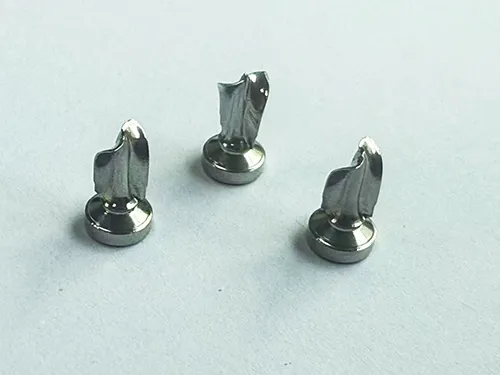
Four major technological breakthroughs in cardiac pacemaker parts manufacturing.
01 Overcoming Difficulties in Material Machining
To address the challenges of high hardness (HRC 35-45) and easy tool adhesion during cutting of titanium alloy/cobalt-nickel alloy:
- Customized Special Tools: Adopt ultra-fine grain cemented carbide tool heads combined with cryogenic cutting technology, which doubles tool life and improves machining efficiency by 30%.
- Anti-oxidation Treatment: Fill the entire machining process with inert gas to prevent the thickness of the material surface oxidation layer from exceeding 5 nm, eliminating subsequent grinding processes and reducing costs.
02 Precision Control
- Machining Equipment: Equipped with advanced high-precision machining equipment, such as wire-cut EDM machines and ultra-precision grinders with nanometer-level precision, achieving positioning accuracy of ±0.001 mm and capable of machining parts with minimum hole diameter of 0.1 mm.
- Real-time Inspection: Conduct 100% inspection using laser diameter gauges (accuracy 0.0001 mm) and Zeiss coordinate measuring machines after each process to screen out defective products.
03 Surface Quality Enhancement
- Rough Polishing: Use diamond grinding wheels (grain size 8000) to remove machining marks.
- Fine Polishing: Adopt nano-grade silica polishing solution to achieve Ra ≤ 0.02 μm.
- Ultra-clean Cleaning: Perform ultrasonic + deionized water cleaning in a Class 10 cleanroom, ensuring residual impurities ≤ 0.1 mg/m², which meets implant standards.
04 Miniaturization & Multifunctionality
To reduce physical burden on patients and improve their quality of life, cardiac pacemakers are developing towards smaller size and lighter weight, with the introduction of MEMS micromachining technology:
- Integrate sensor slots and wire interfaces on a 10 mm × 5 mm chip with an error margin ≤ 0.003 mm.
- This technology enables the integration of various functional components (e.g., sensors, processors) on microchips, endowing pacemakers with more powerful functions and higher intelligence.
For example, pressure sensors manufactured using MEMS technology can monitor cardiac pressure changes in real time, providing more accurate data support for the pacemaker’s operation.Looking ahead, with the deepening of technological research and the improvement of industry standards, cardiac pacemaker parts manufacturing will continue to shoulder the mission of safeguarding human health, moving toward higher precision, better biocompatibility and more intelligent production modes, and injecting lasting impetus into the sustainable development of the global medical device industry.
Aluminum Alloy Machining CNC machining Hearing aid parts Medical parts processing Medical Screw Machining pacemaker Rolling Bearing Semiconductor components Shaft Core slip ring Stainless Steel