
Valves
Valves are core components of fluid control systems, and their sealing and regulating performance highly depend on precision-machined parts.
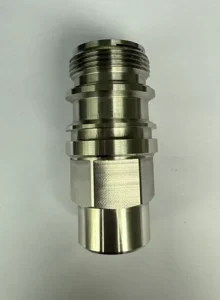
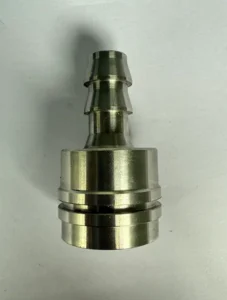
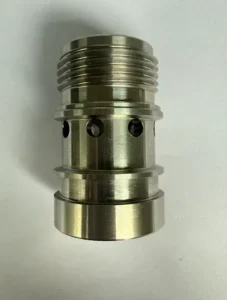
| Core Machined Components | Materials | Key Machining Parameters | Application Value |
| Valve Stem / Valve Core | Stainless Steel 316L / Titanium Alloy TC4 / High-Temperature Alloy | Dimensional Tolerance ±0.002 mm Surface Roughness Ra 0.05 μm Cylindricity ≤0.001 mm | Ensures tight sealing during valve opening and closing, withstands high pressure and corrosion, and achieves zero leakage |
| Valve Seat Sealing Surface | Hard Alloy Surfacing / Ceramic Coating Substrate | Flatness ≤0.0015 mm Sealing Surface Roughness Ra 0.02 μm | Improves wear resistance, adapts to high-frequency opening and closing conditions, and extends valve service life |
| Valve Disc / Valve Plate | Ductile Iron / Aluminum Alloy 6061 | Geometric Tolerance ≤0.003 mm Flow Channel Surface Accuracy ±0.005 mm | Optimizes fluid passing efficiency, reduces pressure loss, and enables precise regulation |
| Actuator Connecting Shaft | 40Cr Quenched and Tempered Steel | Keyway Symmetry ≤0.002 mm Thread Tolerance 5H/5g | Ensures smooth linkage with actuators and accurate torque transmission without deviation |
Machining Process and Quality Inspection Standards
Process Solution: Adopt 5-axis CNC simultaneous machining to achieve one-time forming of complex curved surfaces; key sealing surfaces are processed by CNC grinding + polishing for stable and controllable precision.
Quality Inspection Requirements: 100% inspection of key dimensions with Coordinate Measuring Machine (CMM); pressure test for sealing performance (pressure resistance ≥10MPa); defect rate controlled below 0.3%.
Working Condition Adaptability: Machined parts can withstand high and low temperature environments ranging from -40℃ to +500℃, suitable for harsh scenarios such as chemical industry, petroleum, and aerospace.
Aluminum Alloy Machining CNC machining Hearing aid parts Medical parts processing Medical Screw Machining pacemaker Rolling Bearing Semiconductor components Shaft Core slip ring Stainless Steel