
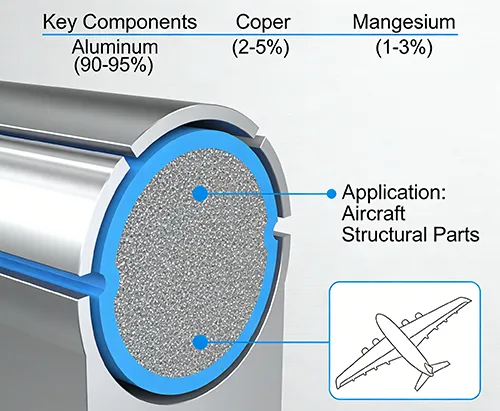
In high-end precision manufacturing, Stainless Steel (304, 316, 17-4PH) and Aerospace Aluminum Alloys (6061, 7075, 2024) are the “backbone” materials. From miniature medical components to massive aerospace structural parts, these materials are ubiquitous.
However, when requirements reach the “ultra-precision” stage—tolerances within ±0.005mm—the difficulty increases exponentially. Achieving consistent quality at this level requires overcoming several critical technical hurdles.
I. High-Precision CNC Challenges: Stainless Steel
(Focus: 303, 304, 316, 17-4PH)
1. Material Adhesion & Burrs
Stainless steel is known for its high ductility and toughness. During cutting, chips are difficult to break, often leading to Built-Up Edge (BUE) on the tool. This compromises dimensional accuracy and surface roughness. For micro-features like small holes and thin walls, removing stubborn burrs without damaging the part is a major challenge.
2. High Cutting Force & Rapid Tool Wear
While not extremely hard, stainless steel possesses high strength, leading to significant cutting loads. Tool wear is substantially higher than with carbon steel, which not only increases costs but also causes dimensional drift during long machining cycles.
3. Thermal Deformation
Due to poor thermal conductivity, heat concentrates at the cutting zone. Slender shafts and thin-walled parts are highly susceptible to thermal expansion, making it extremely difficult to stabilize tolerances within the ±0.005mm range.
4. Residual Stress & Springback
Raw bar and plate stock often contain high internal stress. After precision machining, parts may “rebound” or deform over time. This necessitates strict stress-relief annealing, a clear separation between roughing and finishing, and specialized clamping strategies.
II. High-Precision CNC Challenges: Aerospace Aluminum
(Focus: 6061, 7075, 2024)
1. Low Rigidity & Chatter
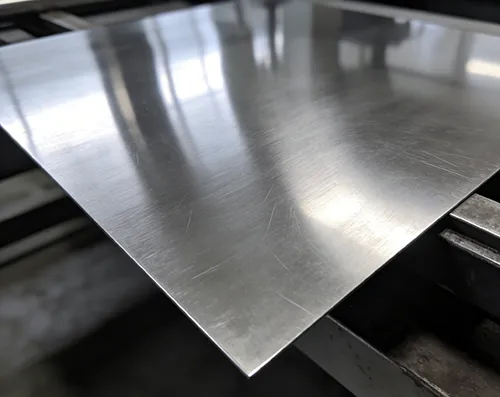
Aerospace aluminum is relatively soft. Thin-walled or deep-cavity structures are prone to tool deflection (“pushing” the tool). This often results in vibration marks or “chatter” on high-gloss surfaces, ruining the aesthetic and precision.
2. High Coefficient of Thermal Expansion (CTE)
Aluminum’s CTE is more than double that of steel. A room temperature fluctuation of just 10°C can cause a long component to exceed its tolerance limit. High-precision aluminum machining must be conducted in a temperature-controlled environment.
3. Surface Sensitivity
The soft surface is easily scratched or dented by fixtures, swarf (chips), or even manual handling. Since aerospace parts often have “zero-defect” cosmetic requirements, the scrap rate due to handling is a constant concern.
4. Brittleness & Chipping (High-Strength Alloys)
High-performance alloys like 7075 are more brittle than standard grades. Sharp corners and thin edges are prone to chipping or “chunking” during high-speed milling, requiring highly optimized tool paths and feed rates.
5. Flatness & Parallelism Bottlenecks
Aerospace components often feature large surface areas. The accumulation of cutting stress and clamping force makes achieving 0.01mm/m flatness a master-level challenge in process engineering.
III. The “Golden Standard” for High-Precision Hardware
To bridge the gap between “standard machining” and “ultra-precision CNC,” manufacturers must address three core pillars:
- Workholding Innovation: Standard vices often cause deformation. Success relies on vacuum chucks, custom-designed jigs, and low-stress clamping techniques.
- Metrology Over Production: At the ±0.002mm level, inspection is harder than machining. A dedicated lab with CMM (Coordinate Measuring Machines), height gauges, and profilometers is mandatory.
- Batch Stability: The true hallmark of a high-end CNC facility is not just producing one “golden sample,” but maintaining a stable yield across thousands of units.
Aluminum Alloy Machining CNC machining Hearing aid parts Medical parts processing Medical Screw Machining pacemaker Rolling Bearing Semiconductor components Shaft Core slip ring Stainless Steel