Titanium and Inconel are widely used in aerospace manufacturing due to their excellent properties such as high strength-to-weight ratio, corrosion resistance, and high-temperature stability. However, their inherent characteristics—including high hardness, poor thermal conductivity, and strong chemical reactivity—pose significant challenges in machining, often leading to tool wear, poor surface quality, and even part damage or scrap. To address these issues, it is crucial to focus on tool requirements, heat dissipation optimization, and process control, ensuring efficient and high-quality machining while minimizing part loss.
1. Key Challenges in Machining Titanium and Inconel
1.1 High Hardness and Abrasiveness
Both titanium alloys (e.g., Ti-6Al-4V) and Inconel (e.g., Inconel 718) have high hardness, especially after heat treatment. This characteristic easily causes severe abrasion, chipping, and premature failure of cutting tools, increasing the risk of part damage during machining.
1.2 Poor Thermal Conductivity
The thermal conductivity of titanium is only about 1/4 of steel, and Inconel’s thermal conductivity is even lower. During machining, a large amount of cutting heat cannot be quickly transferred from the cutting zone, resulting in high local temperatures (often exceeding 800°C). This not only accelerates tool wear but also may cause thermal deformation of the part.
1.3 Strong Chemical Reactivity
At high temperatures generated during machining, titanium and Inconel are prone to react with tool materials (such as tungsten carbide), forming chemical bonds. This leads to tool adhesion and crater wear, further reducing tool life and affecting machining accuracy.
1.4 Low Elastic Modulus (Titanium)
Titanium has a low elastic modulus, which easily causes elastic deformation during machining. This deformation leads to poor dimensional accuracy, poor surface finish, and even tool vibration, which may damage the part.
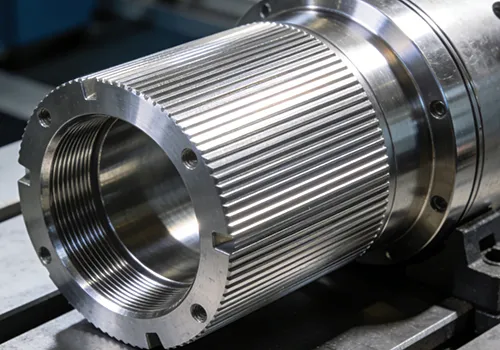
2. Tool Requirements for Machining
2.1 Tool Material Selection
Tool materials must have high hardness, wear resistance, heat resistance, and chemical stability to withstand the harsh machining environment of titanium and Inconel. Common options include:
- Cemented Carbide with Grain Refinement: Fine-grained tungsten carbide (WC-Co) tools (grain size 0.5–1.0 μm) are preferred. Adding tantalum carbide (TaC) or niobium carbide (NbC) can enhance heat resistance and reduce chemical reactivity with the workpiece.
- Cubic Boron Nitride (CBN) Tools: With extremely high hardness and heat resistance (up to 1200°C), they are suitable for high-speed machining of hardened titanium and Inconel parts, especially for finishing operations to ensure high surface quality.
- Diamond-Coated Tools: CVD diamond coatings provide excellent wear resistance and low friction. They are more suitable for machining Inconel or non-reactive titanium alloys, but require strict heat control to avoid chemical reactions with titanium at high temperatures.
2.2 Tool Geometry Design
Reasonable tool geometry can reduce cutting force, improve heat dissipation, and avoid tool vibration, protecting both the tool and the part. Key design points include:
- Cutting Edge Geometry: Adopt a positive rake angle (5°–15°) to reduce cutting force and friction; a honed cutting edge (radius 0.02–0.05 mm) enhances edge strength, preventing chipping and stress concentration.
- Tool Nose Radius: A larger radius (0.8–1.2 mm) improves surface finish and reduces vibration, but needs to be balanced with cutting force and heat generation based on roughing or finishing processes.
- Flute Design: For end mills and drills, a spiral flute with a large helix angle (30°–45°) increases tool-workpiece contact length, improves chip evacuation, and reduces heat accumulation. The flute cross-section should be optimized to avoid chip clogging, which can cause tool breakage and part damage.
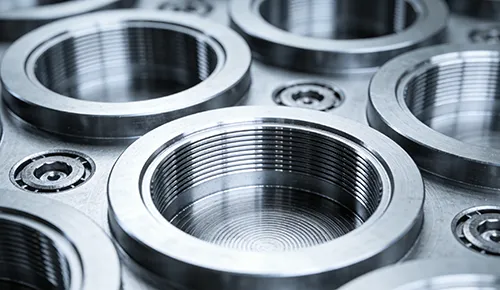
3. Heat Dissipation Solutions to Avoid Part Damage and Scrap
3.1 Optimized Cutting Fluid Selection and Application
Cutting fluid plays a key role in heat dissipation, lubrication, and chip removal. For titanium and Inconel machining, follow these principles:
- Fluid Type: Use high-pressure, high-lubricity synthetic or semi-synthetic fluids with extreme pressure (EP) additives (e.g., sulfur, phosphorus, chlorine compounds), which form a protective film to reduce friction and prevent chemical reactions between the tool and workpiece.
- Application Method: Adopt high-pressure coolant delivery (100–200 bar) to inject fluid directly into the cutting zone, ensuring it reaches the tool-workpiece contact area to maximize heat dissipation. For deep-hole drilling or end milling, use tools with internal coolant channels for better efficiency.
- Fluid Management: Regularly check and maintain cutting fluid concentration, temperature, and cleanliness. Excessive temperature or contamination will reduce its performance, leading to tool wear and part damage.
3.2 Rational Cutting Parameter Setting
Cutting parameters (cutting speed, feed rate, depth of cut) directly affect heat generation and tool load. Reasonable settings can reduce heat accumulation and avoid part scrap:
- Cutting Speed: Due to poor thermal conductivity, high speeds generate excessive heat. Recommended speeds: 30–100 m/min for titanium alloys, 20–80 m/min for Inconel. Lower speeds are used for finishing to ensure surface quality and avoid burns.
- Feed Rate: Adopt a moderate rate (0.1–0.3 mm/rev) to balance efficiency and heat generation. Slightly higher rates for roughing, lower rates for finishing to ensure surface finish.
- Depth of Cut: Avoid excessive depth to prevent high cutting force and vibration. Roughing: 1–5 mm; Finishing: 0.1–0.5 mm to reduce thermal stress and improve dimensional accuracy.
3.3 Process Control and Vibration Reduction
Uncontrolled vibration during machining causes tool chipping, part surface damage, and dimensional errors. Effective process control measures include:
- Enhance Rigidity: Improve the rigidity of the machining system (machine tool, fixture, tool). Use high-rigidity machine tools, rigid fixtures to clamp workpieces firmly, and short tool holders/tools to reduce overhang and vibration.
- Step Machining: For parts with complex shapes or large machining allowances, use step machining to gradually reduce depth of cut, avoiding excessive force, vibration, and heat accumulation in a single pass.
- Real-Time Monitoring: Use advanced systems to monitor cutting force, temperature, and tool wear in real time. Adjust parameters or stop machining when abnormalities are detected to avoid tool failure and part scrap.
Related Articles
9 Key Challenges in High-Precision CNC Machining: Stainless Steel vs. Aerospace Aluminum
4. Additional Measures to Ensure No Part Scrap
In addition to tool selection and heat dissipation, the following measures further ensure machining quality and avoid part scrap:
- Pre-Machining Heat Treatment: Annealing or other heat treatments for high-hardness titanium and Inconel parts can reduce workpiece hardness, improve machinability, and reduce tool wear and part deformation.
- Tool Wear Management: Regularly inspect tools for wear; replace them in a timely manner when wear reaches the limit to avoid poor surface quality, dimensional errors, or tool breakage that causes part damage.
- Quality Inspection: Conduct strict inspections during and after machining, including dimensional inspection, surface roughness inspection, and defect detection (e.g., cracks, burns), to handle quality problems in a timely manner and avoid further losses.
5. Conclusion
Machining titanium and Inconel for aerospace parts is challenging due to their high hardness, poor thermal conductivity, and strong chemical reactivity, which easily lead to tool wear and part scrap. However, by strictly following tool requirements (reasonable material and geometry selection), optimizing heat dissipation (cutting fluid and parameter control), and strengthening process control (vibration reduction and real-time monitoring), combined with additional quality assurance measures, we can achieve efficient, high-quality machining, minimize part loss, and meet the strict requirements of aerospace manufacturing.
Aerospace Parts Aluminum Alloy Machining CNC machining Hearing aid parts Inconel Laryngoscope LFP Batteries Medical parts processing Medical Screw Machining pacemaker Rolling Bearing Semiconductor components Shaft Core slip ring Stainless Steel Titanium