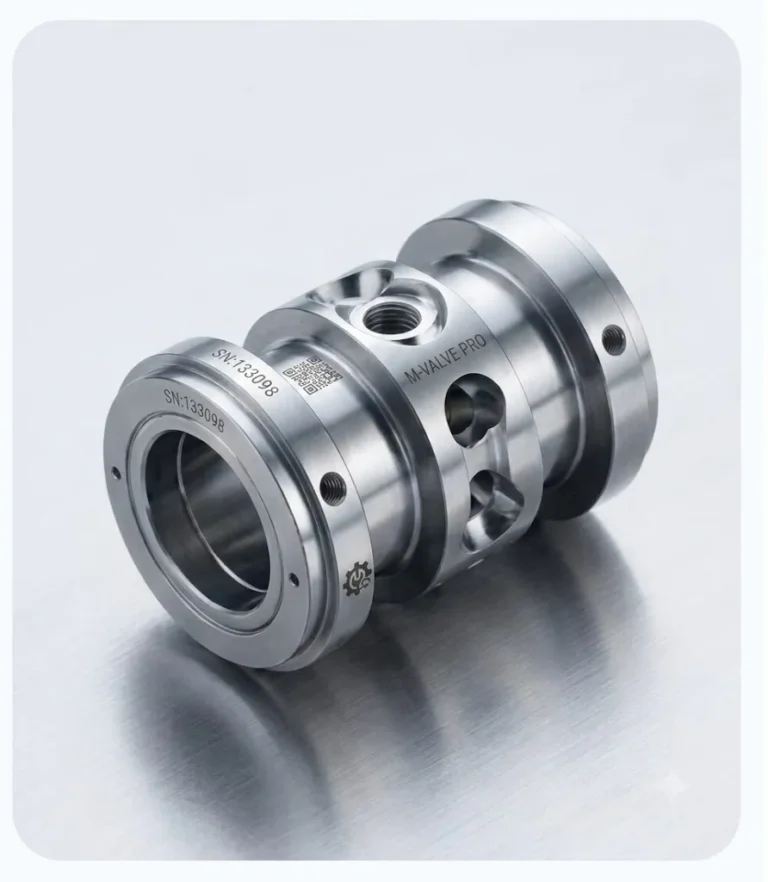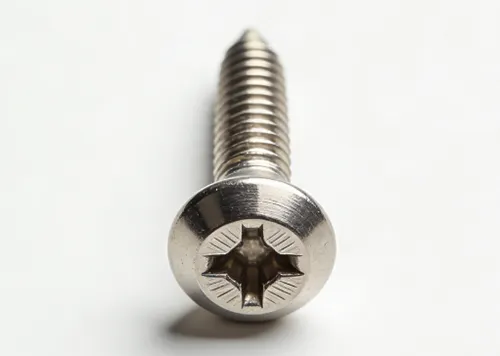
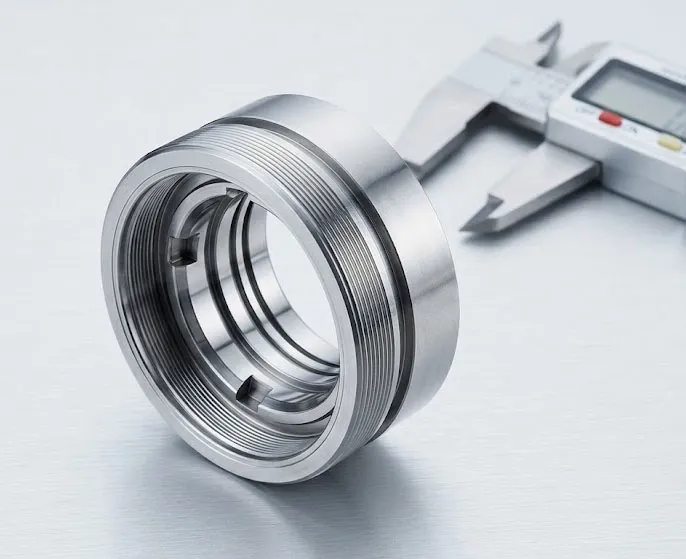
In high-end precision manufacturing, Stainless Steel (304, 316, 17-4PH) and Aerospace Aluminum Alloys (6061, 7075, 2024) are foundational backbone materials. From miniature medical implant components to complex aerospace structural parts, these high-performance alloys are ubiquitous.
However, moving into ultra-precision machining—achieving tight tolerances within ±0.005 mm—presents exponential technical challenges. Ensuring batch-to-batch consistency at this level requires mastering thermal expansion, cutting vibration, and specialized custom tooling.
Key Precision Metrics:
Primary Applications: Medical Micro-Components & Aerospace Assemblies
Tolerance Standard: Up to ±0.005 mm
Core Materials: Stainless Steel (304 / 316 / 17-4PH) & Aluminum Alloys (6061 / 7075 / 2024)
I. High-Precision CNC Challenges: Stainless Steel
(Focus: 303, 304, 316, 17-4PH)
1. Material Adhesion & Burrs
Stainless steel is known for its high ductility and toughness. During micro-machining operations, chips are difficult to break, often leading to Built-Up Edge (BUE) formation on the cutting tool. This degrades surface roughness and dimensional accuracy. For complex micro-features like small drilled holes and thin walls, deburring stainless steel parts without damaging critical edge radii remains a major manufacturing hurdle.
2. High Cutting Force & Rapid Tool Wear
While not extremely hard, stainless steel alloys possess high tensile strength, creating substantial mechanical cutting loads. Tool flank wear is significantly higher compared to standard carbon steel turning, which not only drives up tooling costs but also causes gradual dimensional drift during long CNC machining cycles.
3. Thermal Deformation & Heat Build-Up
Due to low thermal conductivity, cutting heat rapidly concentrates within the engagement zone rather than dissipating through chips. Slender shafts and thin-walled precision parts are highly susceptible to localized thermal expansion, making it extremely difficult to maintain consistent ±0.005 mm tolerances in continuous production.
4. Residual Stress & Springback Warping
Raw stainless steel bar stock and cold-drawn plates often harbor high internal residual stress. As material is removed during custom precision CNC machining, the part can spring back, warp, or deform over time. Overcoming this requires strict stress-relief annealing protocols, clear separation between roughing and finishing passes, and specialized low-stress clamping techniques.
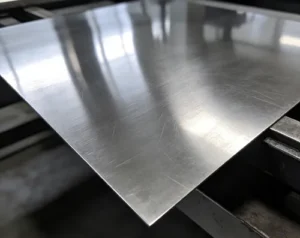
II. High-Precision CNC Challenges: Aerospace Aluminum
(Focus: 6061, 7075, 2024)
1. Low Rigidity & Chatter Vibration
Aerospace aluminum alloys possess a relatively low modulus of elasticity compared to steel. During high-speed CNC milling of thin-walled or deep-cavity structures, parts are prone to tool deflection and workpiece chatter. This unstable cutting action leaves visible vibration marks on high-gloss surfaces, compromising both cosmetic quality and geometric precision.
2. High Coefficient of Thermal Expansion (CTE)
Aluminum’s coefficient of thermal expansion is more than double that of stainless steel. An ambient shop floor temperature fluctuation of just 10 °C can cause large-format structural components to expand beyond tight tolerance limits. Maintaining ultra-precision tolerances requires strict climate-controlled machining environments and real-time thermal compensation.
3. Surface Sensitivity & Cosmetic Scrap Risks
Due to low surface hardness, aerospace aluminum parts are easily scratched or dented by chip accumulation, soft-jaw fixtures, or operator handling. Because aerospace and defense components strictly enforce zero-defect cosmetic specifications, improper chip evacuation and manual handling remain leading causes of part scrap.
4. Edge Chipping & Micro-Fractures (High-Strength Alloys)
High-performance aerospace alloys like 7075-T6 and 2024 exhibit higher yield strength and lower fracture toughness than commercial grades. Thin ribs, sharp internal corners, and exit edges are highly susceptible to micro-chipping or material breakout during high-speed milling, demanding specialized tool geometries and optimized trochoidal toolpaths.
5. Flatness & Parallelism Bottlenecks
Large-surface aerospace structural panels tend to warp under accumulated cutting stress and localized hydraulic clamping forces. Achieving stringent geometric tolerances—such as 0.01 mm/m flatness and parallelism across extended dimensions—requires stress-relieved stock, vacuum fixture setups, and multi-pass balanced stock removal.
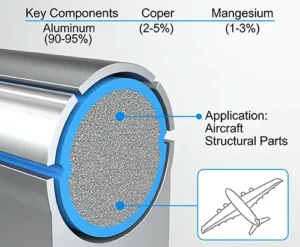
| Feature / Challenge | Precision Stainless Steel (303, 304, 316, 17-4PH) | Aerospace Aluminum Alloys (6061, 7075, 2024) |
|---|---|---|
| Primary Challenge | Work-hardening, BUE & rapid tool wear | Chatter vibration & CTE thermal expansion |
| Achievable Tolerance | Down to ±0.005 mm | Down to ±0.005 mm |
| Optimal Tooling | PVD-coated carbide & high-pressure coolant | High-helix 3-flute routers & DLC coatings |
| Workholding Strategy | Hydraulic / low-stress mechanical clamping | Vacuum fixtures & soft-jaw support |
| Target Applications | Medical implants, surgical tools, fluid valves | Aerospace brackets, optical housings, UAV frames |
III. The “Golden Standard” for High-Precision Hardware
To bridge the gap between standard machining and ultra-precision CNC manufacturing, high-end machine shops must build their capabilities around three core pillars:
- Workholding Innovation: Standard machine vises often introduce clamping deformation on delicate parts. Achieving sub-micron repeatability relies on dedicated vacuum chucks, custom-engineered jigs, and low-stress clamping techniques tailored to complex geometries.
- Metrology Over Production: When working at the ±0.005 mm or sub-micron level, part measurement becomes more challenging than the machining process itself. A climate-controlled quality lab equipped with Coordinate Measuring Machines (CMM), optical profilometers, and high-resolution height gauges is mandatory.
- Batch Yield Stability: The true hallmark of a premium precision CNC machining supplier is not merely delivering a single prototype “golden sample,” but maintaining high yield stability, tight CPK process control, and batch-to-batch consistency across production runs.
Frequently Asked Questions (FAQ)
- Q: Can you achieve tight tolerances within ±0.005 mm for both stainless steel and aluminum?
- A: Yes. Sunpower Manufacturing utilizes high-precision multi-axis CNC machines, climate-controlled environments, and advanced CMM inspection to guarantee tolerances down to ±0.005 mm for both material groups.
- Q: How do you prevent thin-walled aluminum parts from warping during machining?
- A: We apply multi-pass stress-relief strategies, optimized high-speed toolpaths, and custom vacuum workholding to balance cutting forces and eliminate deformation.
- Q: Do you offer DFM (Design for Manufacturability) support for prototype projects?
- A: Absolutely. Our engineering team conducts free DFM reviews on all incoming 2D/3D CAD drawings to help optimize part geometries, reduce unit cost, and prevent manufacturing bottlenecks.
Aerospace Parts Aluminum Alloy Machining CNC machining Hearing aid parts Inconel Laryngoscope LFP Batteries Medical parts processing Medical Screw Machining pacemaker Rolling Bearing Semiconductor components Shaft Core slip ring Stainless Steel Titanium