
LFP Batteries: The New Benchmark for Safety and Sustainability in Green Energy
Lithium Iron Phosphate batteries are rapidly becoming the preferred choice in the green energy sector. But what exactly is an LFP battery? What are its core advantages? Let’s take a deep dive into this promising technology and its wide-ranging applications.
I. What Are Lithium Iron Phosphate (LFP) Batteries?
Lithium Iron Phosphate batteries, commonly known as LFP batteries, are a type of rechargeable lithium-ion battery. They utilize Lithium Iron Phosphate ($LiFePO_4$) as the cathode material and graphite as the anode.
Due to its stable oxidation state, $LiFePO_4$ offers excellent safety, superior high-temperature performance, and is non-toxic, non-polluting, and cost-effective with abundant raw materials. It is widely regarded as the most viable cathode material for next-generation lithium batteries. To overcome its inherent low electrical conductivity, researchers have optimized its crystal structure and thermal stability, resulting in the high-efficiency, eco-friendly battery technology we use today.
II. Key Advantages: Unmatched Safety and Performance
LFP batteries utilize a chemically stable phosphate structure, providing superior thermal and structural integrity. They can withstand high temperatures and heavy usage without the risk of combustion or explosion.
1.Exceptional Performance:
Outperforms traditional batteries in fast charging, low self-discharge rates (only ~2% per month), and stability at low charge levels.
2.Eco-Friendly:
Built with non-toxic materials and fully recyclable, supporting global sustainability goals.
3.Extended Lifespan:
While standard Li-ion batteries have limited cycles, LFP batteries support 3,000+ cycles, lasting over 10 years with proper maintenance—offering significant long-term ROI.
4.Environmental Adaptability:
Reliable operation across extreme heat, cold, and high-vibration environments.
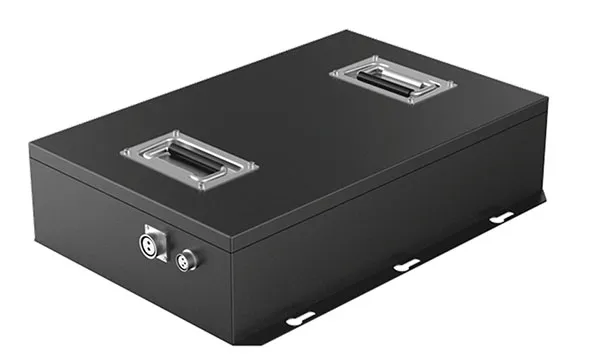
III. Diverse Applications
1.Medical Equipment:
Ensures electrical safety in life-support systems and precision instruments through high reliability.
2.Security & Surveillance:
Provides continuous power for alarm systems and monitoring devices in all climates.
3.Robotics:
Delivers stable power for industrial arms and service robots, ensuring uninterrupted execution of complex tasks.
4.Power System Inspection:
Powers inspection robots and portable testing gear, ensuring efficient facility maintenance.
5.Golf Carts & Power Tools:
Reduces replacement costs for high-frequency use and provides robust power for heavy-duty electric tools.
6.Energy Storage Systems (ESS):
Efficiently stores and releases clean energy from solar and wind sources.
7.Starter Batteries:
A superior alternative to lead-acid batteries, stable even at -30°C for high-efficiency vehicle starting.
IV. LFP vs. Ternary Lithium (NCM/NCA): Which is Better?
LFP and Ternary Lithium are the two dominant pathways in the industry. Here is how they compare:
- Safety: LFP is superior in thermal stability; Ternary has higher energy density but carries a higher risk of thermal runaway.
- Energy Density: Ternary (200-300 Wh/kg) is higher than LFP (120-180 Wh/kg).
- Lifespan: LFP (3,000+ cycles) lasts significantly longer than Ternary (1,000-2,000 cycles).
- Cost: LFP is 10%-20% cheaper due to the use of iron and phosphorus instead of costly cobalt/nickel.
- Low-Temperature: Ternary retains ~70% capacity at -20°C, while LFP retains 50%-60%.
- Eco-Friendliness: LFP is non-toxic and easier to recycle.
Recommendation: Choose LFP for safety, longevity, and cost-efficiency (ESS, commercial vehicles, medical). Choose Ternary for high energy density and extreme cold performance (passenger EVs, drones).
Aerospace Parts Aluminum Alloy Machining CNC machining Hearing aid parts Inconel Laryngoscope LFP Batteries Medical parts processing Medical Screw Machining pacemaker Rolling Bearing Semiconductor components Shaft Core slip ring Stainless Steel Titanium