Precision Robot Gripper & End Effector Component Machining
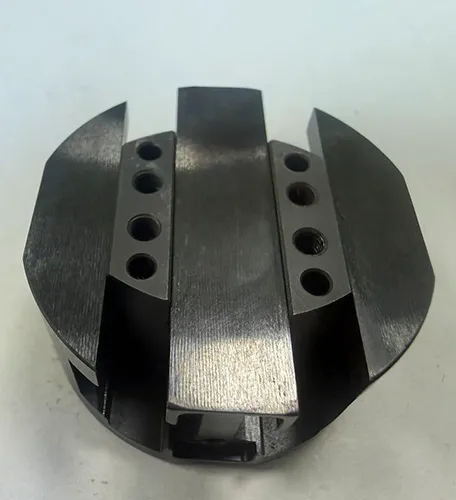
Robot gripper components stand as the core of automated handling systems, dictating the efficiency, accuracy, and reliability of robotic operations across automotive, electronics, and logistics sectors. At Sunpower Manufacturing, we specialize in custom high-precision machining for robot gripper parts, leveraging advanced 5-axis CNC technology to deliver tight-tolerance components with tolerances as low as ±0.001 mm. Our machining processes cover a full range of gripper components—from gripper fingers and jaw modules to transmission shafts and sensor mounting brackets—using premium materials including aluminum alloys, stainless steel, and engineering plastics to meet the rigorous demands of heavy-load, high-cycle automation scenarios.
Compliant with ISO 9001 and AS9100 standards, every robot gripper part undergoes strict dimensional inspection and performance testing to ensure seamless integration with collaborative robots (cobots) and industrial robotic arms. Whether you need standard gripper components or fully customized designs for specialized applications, our engineering team works closely with clients from prototype to mass production, optimizing machining strategies to reduce lead times and enhance product durability.
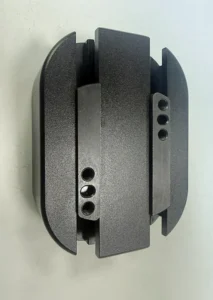
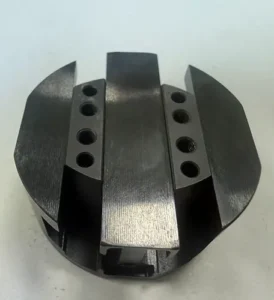
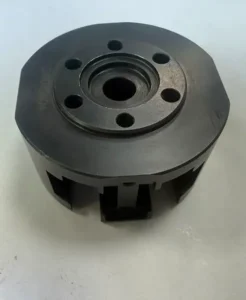
Critical Parameters
| Material Type | Milling Parameters | Grinding Parameters | Surface Finish Requirement |
|---|---|---|---|
| Aluminum Alloy 6061-T6 | • Tool: Carbide end mill (Ø1–Ø8 mm) • Speed: 12,000–20,000 r/min • Feed rate: 0.05–0.15 mm/z • Depth of cut: 0.1–0.5 mm | • Grinding wheel: Resin-bonded white alumina wheel • Speed: 1,800–2,500 r/min • Feed rate: 0.002–0.005 mm/pass | Ra≤0.2μm |
| Stainless Steel 304/316 | • Tool: Coated carbide tool (TiN/TiCN/TiAlN coating) • Speed: 8,000–15,000 r/min • Feed rate: 0.03–0.10 mm/z • Depth of cut: 0.05–0.3 mm | • Grinding wheel: Cubic Boron Nitride (CBN) wheel • Speed: 2,000–3,000 r/min • Feed rate: 0.001–0.003 mm/pass | Ra≤0.1μm |
| Titanium Alloy TC4 | • Tool: Solid carbide ultra-fine grain tool • Speed: 5,000–10,000 r/min • Feed rate: 0.02–0.08 mm/z • Depth of cut: 0.05–0.2 mm | • Grinding wheel: Silicon Carbide (SiC) / Green SiC wheel • Speed: 2,500–3,500 r/min • Feed rate: 0.001–0.002 mm/pass | Ra≤0.05μm |
| Engineering Plastic PEEK | • Tool: Solid carbide / DLC-coated end mill (Ø0.5–Ø5 mm) • Speed: 15,000–25,000 r/min • Feed rate: 0.08–0.20 mm/z • Depth of cut: 0.2–0.8 mm | Grinding not required; post-milling polishing or cryogenic deburring is sufficient | Ra≤0.4μm |
Core Manufacturing Advantages for Robotic EOAT
01 / Ultra-Precise 5-Axis Linkage Machining
Utilizes high-precision 5-axis CNC milling centers to machine complex 3D mounting interfaces and angled jaw structures in a single setup, eliminating realignment errors and ensuring micron-level accuracy.
02 / Lightweight Structural Optimization
Supports topological design machining that removes unnecessary material while retaining maximum clamping force. Lightweight aluminum and PEEK parts reduce robot arm inertia and drive power requirements.
03 / High Durability & Zero-Backlash Assembly
Tight pin-location and bearing-seat tolerances guarantee zero backlash in moving mechanisms, preventing wear and misalignment over millions of gripping cycles.
04 / 100% Quality Metrology Verification
All critical mounting datum planes and gripping surfaces are 100% inspected using ZEISS CMM and optical vision measurement systems. Full inspection reports and material test certificates are included.
Custom Robot Grippers (FAQ)
Yes, we specialize in custom-contoured gripper jaws and soft fingers designed precisely to hold delicate, spherical, or complex organic geometries without marking or scratching the workpiece surface.
For cobots, minimizing end-of-arm tooling weight is critical. We recommend high-strength 7075-T6 anodized aluminum or high-performance engineering plastics like POM-H or PEEK to achieve high stiffness with minimal mass.
We apply hard-coat anodizing (Type III) for aluminum components or electroless nickel plating for steel components. Surface finishes down to Ra 0.2 µm on sliding interfaces minimize seal wear and friction losses over millions of actuation cycles.
Every shipment comes with a full quality dossier, including raw material heat/lot certificates (EN 10204 3.1), CMM full-dimensional inspection reports, coating thickness verification, and Certificate of Conformance (CoC).
Aerospace Parts Aluminum Alloy Machining CNC machining Hearing aid parts Inconel Laryngoscope LFP Batteries Medical parts processing Medical Screw Machining pacemaker Rolling Bearing Semiconductor components Shaft Core slip ring Stainless Steel Titanium